
THE OCEAN’S BROKEN CONVEYOR BELT: WHY A DEEP-SEA CHILL UNDER GREENLAND HAS CLIMATE SCIENTISTS SOUNDING THE ALARM
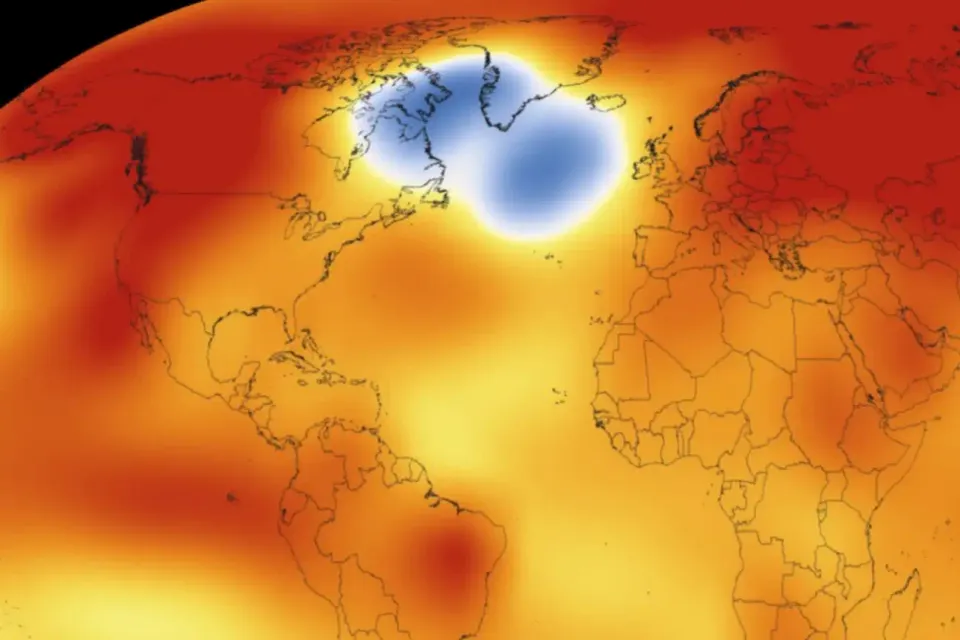
NEW YORK — In an era defined by shattering global temperature records and rapidly warming oceans, one enigmatic patch of the planet is defying the curve. Located just southeast of Greenland and Iceland, a massive expanse of the North Atlantic Ocean known as the "cold blob" or "warming hole" has actively cooled by as much as 1°C over the last few decades. While researchers have spent years debating whether this phenomenon is simply an atmospheric fluke or a seasonal anomaly, a pair of groundbreaking studies published in Geophysical Research Letters has confirmed a far more unsettling reality: the cold blob is the physical, deep-water manifestation of a dwindling global ocean current system.
To understand the severity of this chill, one must understand the Atlantic Meridional Overturning Circulation (AMOC). Frequently described by oceanographers as a colossal oceanic conveyor belt, the AMOC plays a vital role in regulating the Earth's climate by hauling warm, salty surface water northward from the tropics toward the North Atlantic. Once it reaches the chilly northern latitudes, this water cools, increases in density, and sinks to the ocean floor, traveling all the way back south to complete the loop. The new research, led by climate scientists including Wei Liu at the University of California Riverside, shows that the cold blob penetrates down a staggering 1,000 meters into the water column. This full-depth thermal collapse aligns perfectly with the thickness of the AMOC’s upper layer, serving as a "smoking gun" that the great ocean conveyor is drastically losing its strength.
For years, a competing hypothesis argued that the blob was merely skin-deep, forced by intense, chilly winds pulling heat away from the surface and creating excessive cloud cover. However, real-world ocean reanalysis data has thoroughly debunked this theory. Scientists have discovered a classic "negative feedback" loop at play: because the North Atlantic has become so exceptionally cold, the temperature gap between the sea and the air has narrowed. As a result, the ocean is actually losing less heat to the atmosphere than it used to; the air is actively trying to warm the water. The fact that the region is still freezing despite atmospheric help proves that the drop in heat content is strictly a structural breakdown in Ocean Heat Transport—the AMOC is simply failing to deliver the tropical warmth it once did.
The root cause of this circulation gridlock points squarely to human-caused climate change, specifically the rapid melting of the Greenland ice sheet. As colossal volumes of fresh water flood into the subpolar North Atlantic, they dilute the ocean's salinity. Because fresh water is significantly less dense than saltwater, it refuses to sink. This lack of sinking essentially chokes the engine of the conveyor belt, causing the entire global system to stall. While peer-reviewed climate organizations like the Intergovernmental Panel on Climate Change (IPCC) emphasize that a cinematic, sudden "collapse" is unlikely before 2100, the data confirms the AMOC is currently operating at its weakest state in over a millennium.
The ramifications of a permanently crippled AMOC would trigger domino-effect climate shifts across continents, directly altering weather patterns in the United States. Oceanographers have already linked the ongoing circulation slowdown to a 20% to 50% increase in coastal flood days along the U.S. Northeast coast since 2005, driven by changes in how the Gulf Stream dynamically shifts its path. As the current weakens, it is also projected to radically disrupt monsoon rains vital for agriculture in Africa and Asia, alter tropical rainfall distribution, and trigger severe winter cooling across northern Europe.
While the general public remains largely unaware of the silent crisis brewing beneath the Atlantic waves, local governments in the immediate path of the chill are treating it with gravity. The Icelandic Meteorological Office and local researchers have officially elevated AMOC monitoring to a national security issue, recognizing that a stalled current could devastate their regional climate, fisheries, and broader economy. As climate scientists work tirelessly to pinpoint exactly how close the AMOC is to an irreversible ecological tipping point, the blue spot on our warming global maps stands as a stark visual warning: the planet's primary climate regulator is under immense strain.
References & Further Reading
- Phys.org: Atlantic cold blob weakening ocean circulation
- Newsweek / MSN: The Atlantic's 'Cold Blob' Could Change Weather Across America
- IFLScience / MSN: AMOC Alarm: An Unusual "Cold Blob" In North Atlantic Suggests Major Ocean Current System Is Dwindling
- New Scientist: Mysterious cold blob in the Atlantic suggests the AMOC is weakening
- University of California Riverside: Mysterious cold blob could 'disrupt life as we know it' across Europe
- Geophysical Research Letters / EGUsphere: The AMOC is weakening – time to take the evidence seriously


Comments ()